Vester

HOW WE OPERATE

What Energy Operations Looks Like in Reality

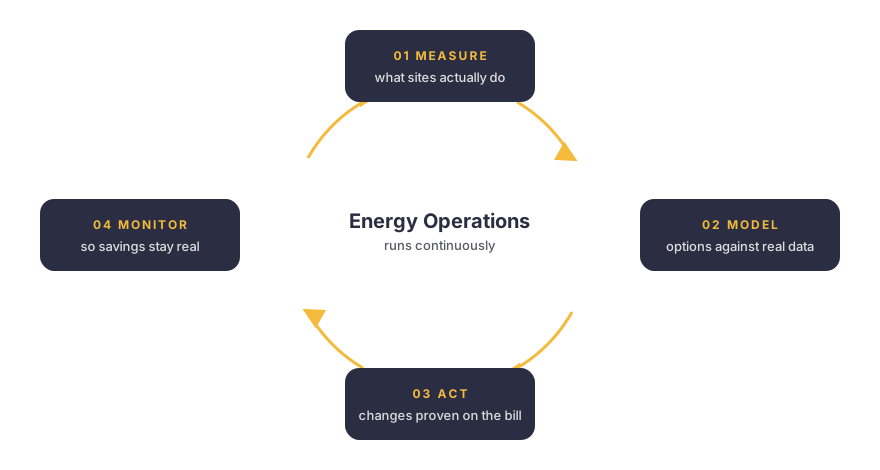
Energy Operations isn’t a theory or a framework. It’s what changes when someone is clearly responsible for energy — how it’s bought, used, contracted, and invested in over time. This page shows how that responsibility plays out in real organisations, beyond dashboards, audits, or one-off projects.

Why this is hard without an operator

Most businesses make energy decisions in isolation. Each decision can look reasonable on its own — but without someone joining them up, costs creep and mistakes get locked in.

Hardware decisions sold in isolation

Solar, batteries, inverters, and control systems are usually specified in isolation, shaped by delivery incentives rather than long-term performance. Without independent oversight, systems are optimised for sale — not for how the site actually runs.

Tariffs designed for suppliers, not assets

Most tariffs are built around supplier risk and simplicity, not around on-site generation, storage, or flexible demand. Assets end up constrained by tariffs that were never designed for how they actually operate.

Contracts lock in outcomes quietly

Energy contracts, network settings, and project commitments often lock in assumptions for years — with no one accountable when those assumptions stop matching reality.

What changes first

These are usually the first signs that energy has moved from a background cost to something being actively run.

When Energy Operations is in place, a few things tend to change quickly:

Where value shows up

Billing & contract reality

This is where most issues hide — and where money quietly leaks out.

Most businesses don’t fully understand what they’ve signed up to — until costs creep or bills stop making sense. Energy Operations brings contracts, bills, and settlement back into line with reality, and fixes issues at source rather than explaining them after the fact.

Evidence

Independent review identified misapplied charges and upstream contract assumptions that didn’t reflect how sites were actually being settled. Issues were corrected with suppliers and network operators, preventing errors from being carried forward.

Independent capital decisions

This is where businesses most often overspend or lock in the wrong system for years.

Capital projects are rarely neutral. Design choices are shaped by delivery constraints, stock, and margin — and once installed, the customer carries the risk. Energy Operations separates system design from delivery incentives and remains accountable after installation.

Evidence

Usage-led modelling was used to pressure-test proposed solar and battery specifications before commitment, avoiding overspecification and aligning investment to how the site actually operates over time.

Asset-aligned tariffing

This is where good assets underperform because the commercial setup is wrong.

Assets only create value if the commercial structure allows them to. Energy Operations treats import and export tariffs as part of the system — not an afterthought — so generation and storage can earn their keep.

Evidence

Import and export tariffs were restructured to reflect on-site generation and storage behaviour, securing differentiated export pricing and improving returns compared to default supplier arrangements.

How we work (guardrails)

  • Independent first — no commissions, referral fees, or delivery incentives influencing decisions.

  • One operational view — finance, facilities, and leadership work from the same assumptions.

  • Cadence over theatre — regular review beats one-off audits and big reveal decks.

PRESSURE-TEST THIS

Pressure-test this against your sites.

We’re comfortable being scrutinised. If you want to see how this model applies to your estate — contracts, projects, tariffs and all — we’ll walk through it with you.